Welcome to WordPress. This is your first post. Edit or delete it, then start writing!
Blog
-
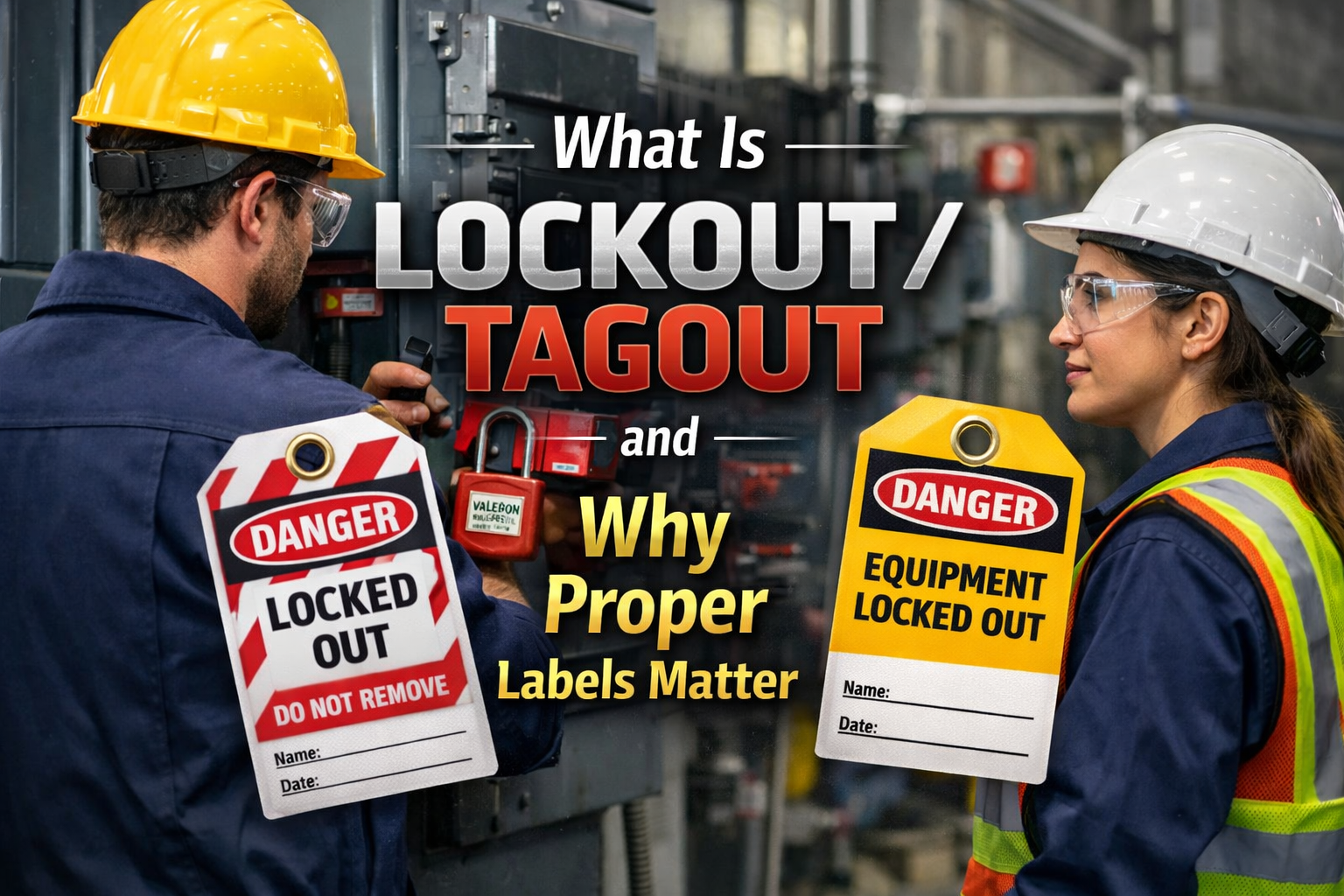
What Is Lockout Tagout and Why Proper Labels Matter
Lockout/Tagout—commonly shortened to LOTO—is a safety procedure used to prevent the unexpected startup or release of hazardous energy while equipment is being serviced or maintained. When done correctly, it protects workers from serious injury or death. When done poorly, it creates a false sense of safety.
At the center of every effective Lockout/Tagout program are clear, durable, and properly applied labels and tags. The lock stops the energy. The tag communicates why the lock is there, who placed it, and what must not happen next.
What Is Lockout/Tagout?
Lockout/Tagout is a set of practices designed to control hazardous energy sources—electrical, mechanical, hydraulic, pneumatic, chemical, or thermal—during maintenance or servicing.
A proper LOTO procedure typically includes:
- Shutting down the equipment
- Isolating the energy source
- Applying a lock to prevent re-energization
- Applying a tag to communicate status and responsibility
- Verifying zero energy before work begins
In the United States, Lockout/Tagout requirements are governed by Occupational Safety and Health Administration regulations, specifically 29 CFR 1910.147.
Why the “Tag” Matters as Much as the Lock
It’s easy to assume the lock does all the work. In reality, the tag is the communication layer of the system.
A lock without a tag answers only one question: something is locked.
A proper tag answers all of these:
- Why is this equipment locked out?
- Who applied the lock?
- When was it applied?
- What work is being performed?
- Who must be contacted before removal?
Without this information, mistakes happen—especially during shift changes, emergencies, or multi-person maintenance events.
The Risks of Poor or Inadequate Labels
Improper tags and labels introduce real risk into an otherwise sound safety process.
Common failures include:
- Paper tags tearing or dissolving in wet environments
- Ink fading until text is unreadable
- Tags falling off due to weak adhesives or fasteners
- Handwritten information smearing or washing away
- Generic tags that don’t clearly communicate danger
When a tag fails, workers are forced to guess—and guessing around energized equipment is how incidents occur.
What Makes a Proper Lockout/Tagout Label?
A proper LOTO label or tag must be designed for the environment it’s used in—not the office it was ordered from.
Key requirements include:
- Durability: Resistant to tearing, moisture, oils, and chemicals
- Legibility: High-contrast text that remains readable over time
- Writeability: Accepts pen or marker without smearing
- Attachment strength: Stays with the lock until intentionally removed
- Clarity: Clearly communicates “DO NOT OPERATE” or equivalent warnings
This is why industrial Lockout/Tagout programs rely on non-paper substrates designed specifically for harsh conditions.
Why Material Choice Matters More Than Design
No amount of good design can compensate for the wrong material.
In industrial environments—wash-down areas, outdoor equipment, high-heat zones, or chemical exposure—paper and laminated paper tags fail quickly. Vinyl labels can stretch or tear. Thin plastics crack in cold conditions.
For this reason, many industrial safety programs use HDPE-based tag materials designed to remain intact and readable throughout the entire lockout event.
A tag that survives the environment ensures the safety process survives with it.
Labels as Part of Safety Culture
Proper Lockout/Tagout labels do more than meet compliance requirements—they reinforce a safety-first culture.
Clear, consistent tags:
- Signal professionalism and seriousness
- Reduce confusion between teams and shifts
- Encourage accountability
- Make safety procedures easier to follow correctly
When labels are durable and consistent across a facility, workers learn to trust them. That trust leads to better compliance and fewer shortcuts.
The Bottom Line
Lockout/Tagout is not just about stopping energy—it’s about communicating danger clearly and reliably.
Proper labels and tags are not accessories. They are critical safety components.
If a tag can tear, fade, smear, or fall off before the lock is removed, it has already failed its job.
In Lockout/Tagout, the quality of the label directly affects the safety of the worker.